An incisional hernia is a problem that can happen after abdominal surgery without anyone noticing it until it starts to hurt. Many people who also see an obesity doctor in Ahmedabad for help with weight control are shocked to learn how much extra weight raises the risk of hernias.
This article talks about what an incisional hernia is, how it happens, how to treat it and how to stop it from coming back. Knowing what you need to know lowers stress. More importantly, it helps you make better choices and makes your recovery go more smoothly.
Learning about an Incisional Hernia
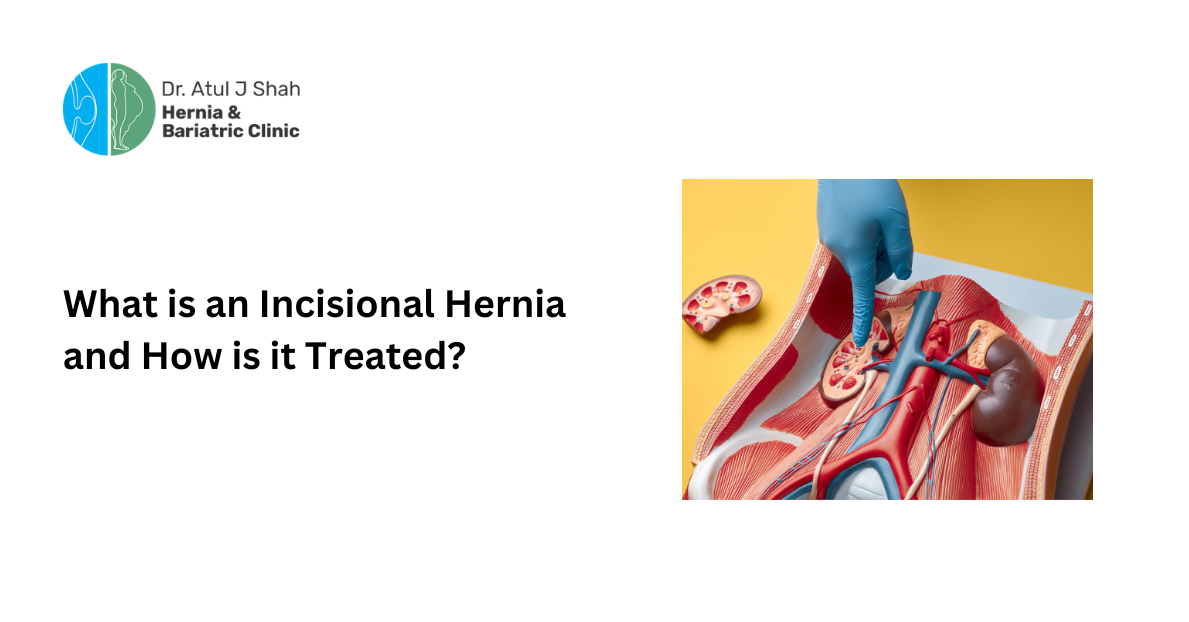
An incisional hernia shows up where a surgical cut used to be. The surgeon opens the abdominal wall during surgery to get to the organs inside. Even though the incision is carefully stitched, the muscle around it is often weaker than the muscle next to it.
A tissue or part of an organ can push through that weak spot over time. Because of this, a bump can be seen near the scar. It might not seem dangerous at first. But it can get bigger over time and make you feel bad.
This kind of hernia can happen months or even years after surgery. People who have had more than one surgery are at a higher risk. People who have trouble healing wounds are also more likely to get sick.
Common Causes and Things That Make You More Likely to Get It
There are a number of things that make it more likely that you will get an incisional hernia.
1. Being overweight
Too much weight on the body puts constant strain on the abdominal wall. Because of this, the healing incision has a hard time when it is under stress. Seeing a qualified obesity doctor in ahmedabad can help you lose weight and keep it off for good.
2. Infection at the Site of Surgery
After surgery, an infection makes the incision area weaker. So, it becomes hard for the body to heal properly.
3. Heavy Lifting or Early Strain
Going back to hard work too soon puts stress on the surgical site. This may cause the tissue to come apart.
4. Long-term coughing or constipation
Both conditions cause abdominal pressure to rise over and over again. This pressure builds up over time and causes hernias to form.
5. Not eating well or smoking
Not getting enough protein and smoking slow down the healing of tissues. As a result, complications are more likely to happen.
Recognizing the Signs
A bulge along the old scar is the most obvious sign. It usually gets worse when you stand up or cough. But it might get better when you lie down.
Other signs include:
- A feeling of heaviness in the stomach
- Pain when you move around
- Swelling or pain around the cut
- In extreme cases, nausea or vomiting
If the hernia gets stuck or its blood supply is cut off, it needs to be treated right away. So, it is very important to get checked out by a doctor right away.
How to Tell if You Have an Incisional Hernia?
Most of the time, doctors start with a physical exam. You might have to stand or cough to make the bulge easier to see.
Imaging tests like CT scans or ultrasounds also confirm the diagnosis. These tests find out how big and bad something is. Because of this, surgeons can plan the best way to treat the patient.
Treatment Choices for Incisional Hernia
Hernias don’t heal on their own. Most of the time, surgery is the only sure way to fix the problem.
1. Open Hernia Repair
The surgeon moves the tissue that is sticking out back into place and strengthens the area with stitches or mesh.
2. Laparoscopic Hernia Repair
This method makes small cuts, which makes it less invasive. Most of the time, recovery is faster and pain is less.
3. Robotic Hernia Repair
This more advanced method lets you be more precise. It helps cases that are complicated or happen often.
Changes to your lifestyle are very important after surgery. Keeping your weight under control is still very important. So, getting help from an obesity doctor in ahmedabad will help you get long-term results.
Stopping Recurrence
You have to be committed to preventing. Keeping a healthy weight lowers pressure in the abdomen. An obesity doctor in Ahmedabad can help you in a structured way and give you long-term plans.
Also, don’t lift heavy things while you’re recovering. Eat a healthy diet that is high in protein. Quit smoking. Carefully follow the advice you get after surgery. These steps greatly lower the chances of complications.
Conclusion
If you get an incisional hernia diagnosed and treated quickly, you can manage it. Modern surgical methods are safe and work well. Also, making smart choices about your lifestyle can help keep you healthy in the future.
If you want expert help and a treatment plan just for you, you should talk to Dr. Atul Shah.